Wild yeast, minimal sulfites, nothing engineered — how we make natural wine in Apple Hill, and what that actually means in the glass.
“Natural wine” gets used loosely these days, so here's exactly what it means at Morton Family Cellars. Every wine we make ferments on wild, native yeast — the cultures that live on the grape skins — never a commercial strain picked from a catalog. We add only minimal sulfites, just enough for stability. We don't take fining or filtering shortcuts to rush a wine into the bottle. And the farming behind the fruit matters as much as the cellar: no synthetic chemicals, no Roundup, ever.
If you want the family story behind all this — the Andersonia legacy and how Greg and Kyle Morton came to make wine this way — that lives on Our Story. This page is about the practice itself.
Low intervention isn't a style trend for us — it's the reason the wine tastes like somewhere.
Commercial yeast makes wine predictable; wild yeast makes it honest. Each fermentation unfolds at its own pace, and the result is depth and texture you can't replicate with a packet. Two barrels of the same grape can show two personalities — that's the point.
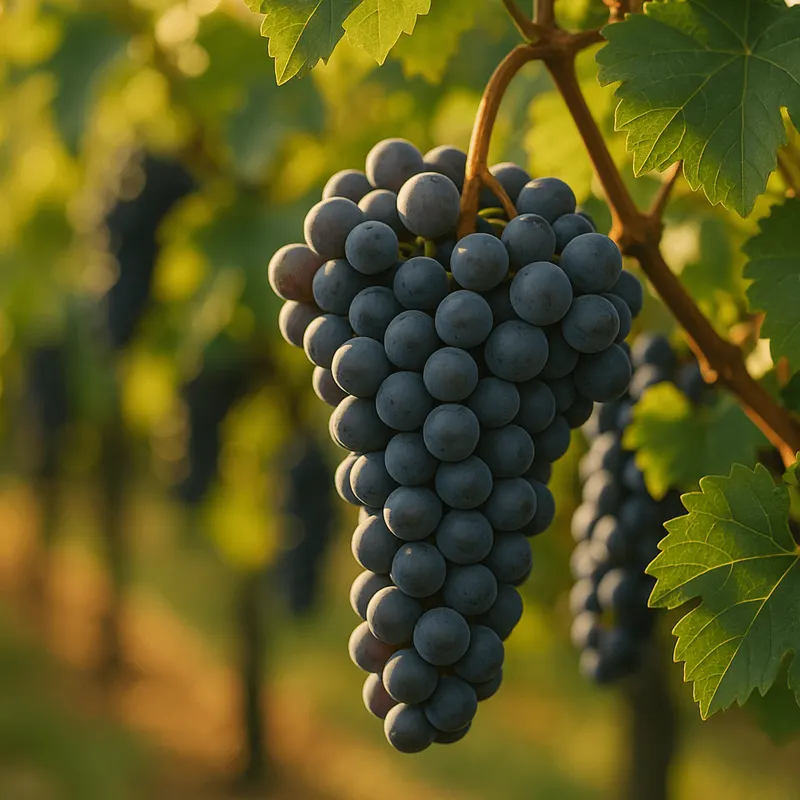
Most of our reds — Zinfandel, Merlot, Cabernet Franc, Barbera — come from El Dorado County fruit, much of it grown at Biama Vineyard, our 3,200-foot estate vineyard with volcanic soils, farmed organically and harvested entirely by hand. Minimal sulfites and no heavy filtering mean those mountain vineyards come through undisguised.
We'd rather under-claim than overstate. The core of our lineup is estate fruit from Biama Vineyard, steps from the tasting room. But some of our wines — the Chenin Blanc, the unoaked Chardonnay, the Cabernet Sauvignon — are made from fruit we source from Lodi and other California growers we trust. Those wines go through the same cellar, the same wild ferments, the same minimal-sulfite philosophy. They're low-intervention wines too; they're just not estate-grown, and we'll always tell you which is which when you visit.
One rule never bends: we don't buy fruit from vineyards that use Roundup or harmful pesticides. If the farming doesn't meet the standard, the grapes don't come in the door. You can browse the whole lineup — whites, reds, and dessert wines — on our wine list.
For us it means four things: fermentation with wild, native yeast only (no commercial yeast strains), minimal sulfites, no fining or filtering shortcuts, and fruit farmed without synthetic chemicals or Roundup. Nothing added to engineer a flavor, nothing stripped out for convenience.
A minimal amount — just enough for stability, never enough to mask the wine. We don't make zero-sulfite wine; we make low-intervention wine that still travels and ages honestly.
No, and we won't pretend otherwise. The heart of our lineup comes from Biama Vineyard, our organically farmed estate vineyard at 3,200 feet in Apple Hill. We also source some fruit from Lodi and other California growers for wines like our Chenin Blanc, Chardonnay, and Cabernet Sauvignon — all made in our cellar with the same wild-ferment, minimal-intervention approach.
Not ours. Wild fermentation and minimal sulfites give the wine more character and a true sense of place, but our small-lot approach is about honesty, not funk for funk's sake. Expect clean, expressive wine that tastes like the vineyard it came from.
At our tasting room in Apple Hill — a restored 1960s speakeasy at 2875 Larsen Drive, Camino, CA. Tastings are $10 per person, free for wine club members and up to three guests. Open Friday through Sunday.
The best way to understand natural wine is in a glass, in the speakeasy tasting room where it was made. We're an hour east of Sacramento in Apple Hill — here's how to plan your visit, or browse everything else there is to do on our visit page.
See Our Wines